 By
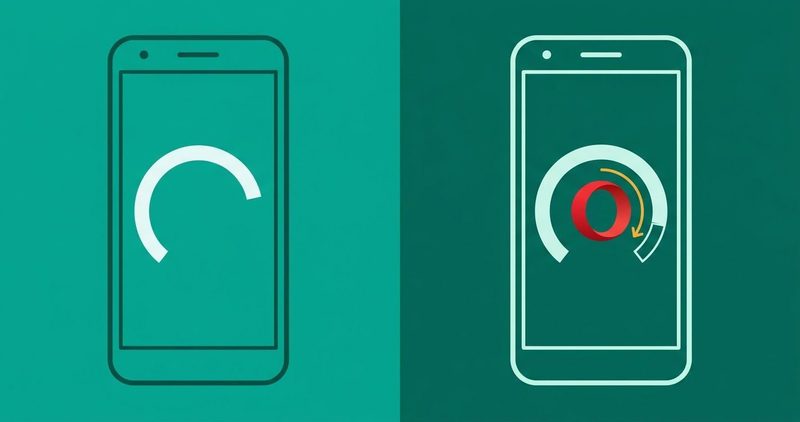
People ask me which data-saving app is best on Android, and the familiar answer is a long list. The honest answer starts with a switch Android already ships, then one free compression browser. I test on a Tecno Spark 40, so every figure here was checked against a bundle that costs real money.
No link here is an affiliate link, and no vendor paid for a place here. The full disclosure sits one tap away via the affiliate disclosure page.
Which data-saving apps are worth it? The quick summary
- Settings first: Android's built-in Data Saver. Free, no download.
- The compression pick: one free Opera browser. Pages shrink by up to 90%.
- Monitors with error bars: they estimate, never measure to the last megabyte.
- Dead apps roundups still push: Lite Mode, Firefox Lite, Max, Datally, UC.
- Your carrier's code often beats any download. The table is below.
Data Saver: the built-in switch
Google shipped Data Saver with Android 7.0 in 2016, and it remains the strongest free lever on your phone. Google's source page, updated 17 June 2026 and read on 13 November 2026, spells out the rules. Apps without unrestricted access get no background data on mobile, and can use data only in the foreground.
| Control | Where | What it does |
|---|---|---|
| Data Saver toggle | Settings, Network and internet, Data Saver | No background mobile data; foreground apps still work |
| Unrestricted data | Same screen, exceptions list | Chosen apps keep background access |
| Data usage | Settings, Network and internet, Data usage | Shows which app eats the bundle |
| Data warning and limit | Data usage, Data warning and limit | Warns at your number; optional hard stop |
| Metered Wi-Fi | Wi-Fi, gear icon, Metered | Treats that Wi-Fi like mobile data |
The rule for phone makers is blunt. Device implementers should not whitelist apps, and users may remove any preloads that are. Apps should shrink images, cut bitrates and compress content. They should not autoplay videos, prefetch files or demand whitelisting without cause. That is Google's own list of developer obligations.
Android Police's five-hack list, 5 April 2025 and read on 13 November 2026, draws the same order. Data Saver first, then per-app restriction. Its metered-Wi-Fi trick is the one most guides miss: mark a Wi-Fi network as metered. The system then drops YouTube to 360p or 240p, pauses cloud backups and asks before big downloads. This post adds what that list lacks: the graveyard, the Opera figures and the Nigerian codes.
Per-app restriction and metered Wi-Fi
Data Saver is the blunt instrument. Per-app restriction is the scalpel. Settings, Apps, the app you want, Mobile data and Wi-Fi: switch off background data for the apps you never need. The Android Police piece gives Samsung's route as Settings, Connections, Data usage.
One gap, dated. A 2022 Samsung community thread showed One UI could not completely restrict some apps. If yours behaves that way, the exceptions list is your real control. Date it: 2022, not today. Re-check on your own build.
Do the Play Store too. Open Play, your profile, Settings, Network preferences. Pick Wi-Fi only for app updates, and don't let anything auto-update over your bundle. One forgotten auto-update can burn a week's data by itself.
On my Tecno Spark 40 the toggle sits behind Settings, Network, Data usage, then the app, then Background data. HiOS and XOS word their menus differently. The switch is the same one, and it is free.
The compression pick
Opera Mini is the one compression browser I can stand behind. TechCabal's Partner piece, 24 April 2025 and read on 13 November 2026, pegs extreme mode at up to 90% smaller pages. Opera's own press release, 8 April 2024, says the same and adds 3,760 TB of free data carried in 2023. That is nearly ₦5 billion in savings, a vendor figure, attributed, never anchored.
Since 2020, MTN and Airtel give Mini users 1.5GB free monthly, no registration (TechCabal, read on 13 November 2026; TheCable, read on 1 October 2026). Opera's own video claims 3GB a month. Two outlets print 1.5GB, so this page prints 1.5GB. Re-check on the day you read this; carrier offers move. If the offer lapses, nothing about Mini changes: it still compresses pages without it.
The same piece gives Mini two extras: Aria, a low-data AI assistant, and MiniPay, a built-in wallet for digital payments. It is marked Partner, so both are vendor claims, carried here with attribution and nothing more.
Opera Mini on Google Play, 500 million downloads at read time, contains ads; I read the listing on 13 November 2026. Install it, flip on extreme mode, and watch the savings counter on the app's own screen. Ad blocking trims tracker weight too.
The graveyard: five dead products
Roundups still send Nigerians to dead apps. The record, dated:
| App | Died | The record | Use instead |
|---|---|---|---|
| Chrome Lite Mode | 29 March 2022 | XDA, quoting Chrome Support Manager Craig, names the M100 stable date, read on 13 November 2026 | Data Saver and Opera Mini |
| Firefox Lite | 30 June 2021 | Mozilla's archived releases repo: no security or other updates from that day, read on 13 November 2026 | Opera Mini |
| Opera Max | 14 August 2017 | Opera's own post: discontinued and delisted from Play, read on 13 November 2026. worldsim still recommends it, March 2022 | Opera Mini |
| Datally | October 2019 | Google discontinued it, reported by The Next Web on 17 October 2019, read on 1 October 2026 | GlassWire or My Data Manager |
| UC Browser | 29 June 2020 | Banned in India with 58 other apps, Reuters, 29 June 2020, read on 1 October 2026 | Opera Mini |
The Nigerian Tribune still runs this list. Its 17 May 2025 edition, read on 13 November 2026, tells readers to download Chrome Lite Mode, UC Browser and Firefox Lite. Its Lite Mode defence is that older versions still support it. An old APK is an unpatched browser. Same audience, corpses in the cargo.
The old-APK workaround inherits every bug and exploit the current build patched out. Installing so old a product its maker walked away from buys you nothing but risk.
Monitors with error bars
Monitors answer the one question Data Saver can't: which app ate the bundle. Three on Play today, all free at entry.
- DataEye, LotusFlare, 1 million downloads, contains ads. The closest living relative of Datally: view and block background data per app.
- GlassWire, Domotz, 1 million downloads. Graphs and firewall alerts; the free tier answers casual checks.
- My Data Manager, ST Advanced, 10 million downloads. Per-app tracking for mobile and Wi-Fi, with usage alerts.
Error bars, printed plainly. A 2017 GlassWire forum thread, read on 1 October 2026, has two monitors measuring the same traffic at 16.5Mb and 7.1Mb. A carrier-bill thread on Reddit, read on 1 October 2026, shows meters landing 100 to 200MB off the carrier's own number. Treat monitors as flashlights, not scales.
Nigeria: the dial codes and the buy-cheap trap
NaijaVPN's Nigeria guide, 6 May 2026 and read on 13 November 2026, lists the balance codes and the social bundles that pair with them.
| Network | Balance code | Social bundle move |
|---|---|---|
| MTN | *131*1# | Pulse social bundles for WhatsApp and X |
| Airtel | *140# | SmartTALK bundles; Airtel has no network-level compression |
| Glo | *127*0# | Glo Café bundles; night data runs midnight to 5am |
| 9mobile | *228# | EasyFlex social bundles; 2G in weak signal retransmits less |
WhatsApp alone justifies the table. It auto-downloads every photo and video: Settings, Storage and data, Media download, Wi-Fi only. TikTok burns about 1GB per hour at default quality. YouTube at 1080p costs about 3GB per hour, against 0.5GB at 480p. That is six times less for the same video. Ads can reach 30% of a news page's bytes. Spotify streams at about 145MB per hour. All rows from the same guide, read the same day.
One boundary, drawn sharp. VTU apps sell cheaper top-up codes; they never reduce a single byte. They rank for saving queries because they answer a different question. Cheaper is not less. If your bundle vanishes anyway, my mobile data draining guide walks the diagnosis.
Who should install what, and the questions readers ask
The order never changes: the switch, then the browser, then the monitors. Who needs what:
- Never-touch-settings reader: Data Saver on and nothing else. Zero installs.
- Bundle dies mid-month: add the extreme-mode browser from Play.
- WhatsApp heavy: Wi-Fi-only media downloads. One path, five minutes.
- Numbers person: one monitor, error bars accepted.
- Cheaper data instead: wrong page. VTU moves the price, never the bytes.
Which compression browser is worth it?
The free extreme-mode one. Max is dead and delisted; Mini lives and compresses. That is the whole pick, and it costs nothing but the install.
Where did Lite Mode go?
Gone with Chrome M100 on 29 March 2022. System Data Saver is the supported replacement, and it is free.
What replaced the discontinued monitor?
Nothing official. GlassWire and My Data Manager cover the seeing job. Expect estimates, not exact meters.
Are the monitors accurate?
Directionally, yes. Expect tens to hundreds of MB of disagreement with your carrier. The trend matters more than any single reading.
Cheaper data, or less data?
Less data lives on this page; cheaper bundles are a VTU question. Two different problems, two different fixes.
Which code checks my bundle?
*131*1# on MTN, *140# on Airtel, *127*0# on Glo, *228# on 9mobile. Codes drift; carriers re-code without notice.
Start with the free step: open Settings, tap Network and internet, then Data Saver, and flip it on. Then install the compression browser and watch your next bundle last. The Android problems hub collects the rest of the set.
Comments
New posts held for reviewCouldn't load comments - the thread service didn't answer. Nothing is being hidden: no approved comments are saved with this page.
No approved comments yet - the first one is yours. New posts are held for review before they appear.